EV Charging News: Latest Trends, Technology, Infrastructure, and Future Updates in 2026
EV Charging News 2026
Are you wondering what is happening in the world of electric vehicle charging? The latest EV charging news shows that the industry is changing faster than ever, with new charging stations, faster charging technology, improved battery systems, and stronger government support across the globe.
As the SoftPurse Infotech Editorial Team, we believe understanding EV charging developments is important for EV owners, future buyers, and technology enthusiasts. The growth of electric vehicles depends heavily on reliable, affordable, and fast charging solutions.
EV Charging NewsIn this guide, we explain the latest EV charging trends, major technology updates, charging networks, challenges, and what the future of EV charging may look like.
Quick Answer
The latest EV charging news focuses on faster charging speeds, wider charging networks, improved battery technology, and universal charging standards. Governments and private companies are investing billions in EV infrastructure to make charging easier and more accessible. Innovations like ultra-fast DC charging, smart charging systems, and better energy management are shaping the future of electric mobility.
What Is EV Charging Technology?
EV charging technology refers to the systems and equipment used to transfer electricity from a power source to an electric vehicle battery. It includes home chargers, public charging stations, fast chargers, charging cables, connectors, and software that manages the charging process.
Modern EV charging systems are designed to provide safer, faster, and more convenient charging experiences. Many newer chargers include smart features such as mobile app monitoring, scheduling, energy tracking, and automatic power management.
- Home AC charging for daily use
- Public AC chargers in parking areas
- DC fast chargers for rapid charging
- Smart charging systems with remote controls
How Does EV Charging Work?
EV charging works by transferring electrical energy from the power grid into the vehicle’s battery. The charging speed depends on the charger type, vehicle compatibility, battery size, and power output.
- The charger connects to the vehicle through a compatible charging cable.
- The charger and vehicle communicate to determine safe power levels.
- Electricity flows into the battery management system.
- The system controls temperature and charging speed to protect battery health.
- Charging automatically stops when the battery reaches the desired level.
| Charging Type | Power Level | Typical Use |
|---|---|---|
| Level 1 AC Charging | Slow (120V) | Overnight home charging |
| Level 2 AC Charging | Medium (240V) | Home and public locations |
| DC Fast Charging | High power | Long-distance travel and quick charging |
Latest EV Charging News and Industry Developments
The EV charging industry continues to experience rapid growth worldwide. Many countries are expanding charging infrastructure to support the increasing number of electric vehicles on the road.
Some of the biggest developments include:
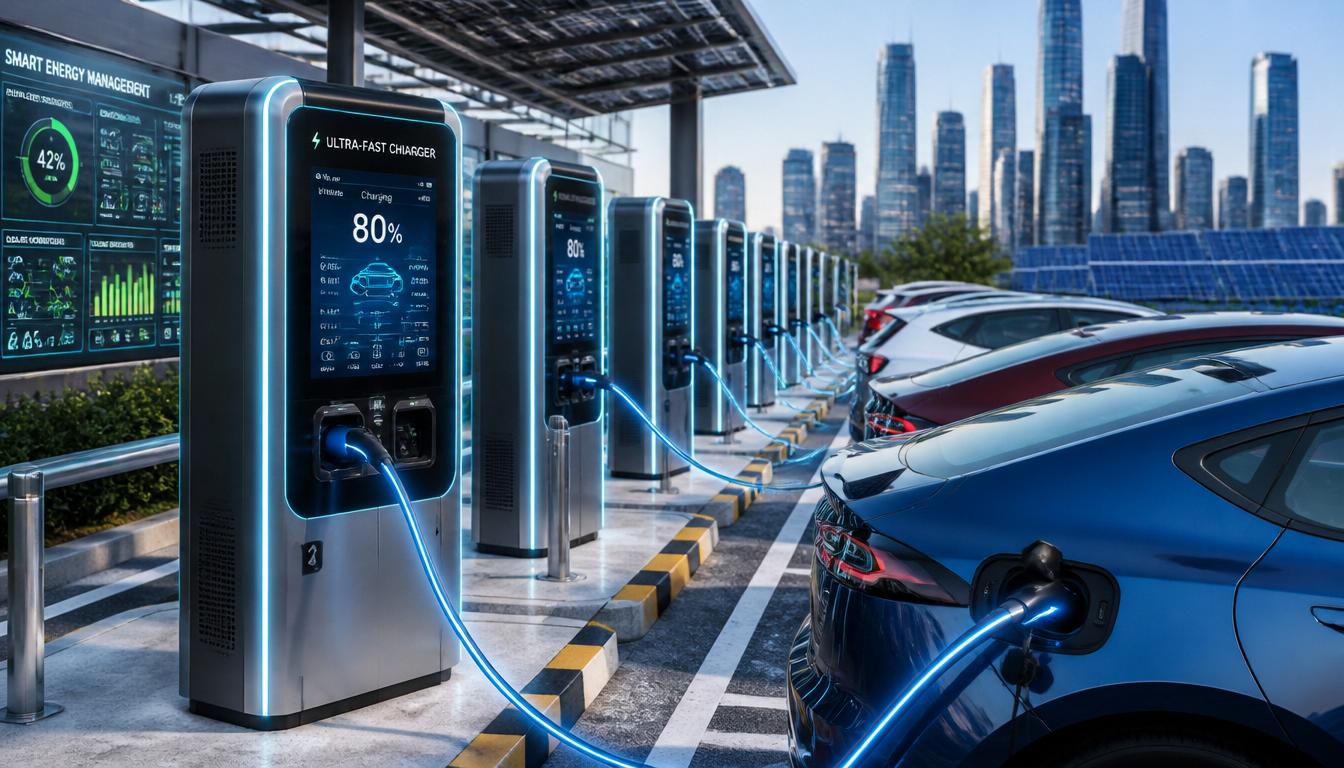
- Expansion of ultra-fast DC charging networks.
- Adoption of universal charging standards.
- More intelligent charging stations connected through mobile applications.
- Better integration with renewable energy sources like solar and wind.
- Growth of charging networks in residential and rural areas.
📷 Upload Image Here
Ultra-Fast Charging Technology Is Becoming More Common
One of the most exciting updates in EV charging news is the development of ultra-fast charging technology. New high-power chargers can add significant driving range within a short amount of time, making electric vehicles more practical for long trips.
Advanced charging systems are improving through:
- Higher power output capabilities.
- Better cooling systems inside charging cables.
- Smarter battery management software.
- Improved communication between vehicles and chargers.
These improvements help reduce charging time while protecting long-term battery performance.
Common EV Charging Problems and Solutions
Although EV charging technology has improved significantly, users may still experience some challenges.
| Problem | Possible Cause | Solution |
|---|---|---|
| Slow charging | Low charger output or battery limitations | Use a faster compatible charger when available |
| Charging interruption | Connection or software issues | Check the cable and restart the charging session |
| Connector incompatibility | Different charging standards | Use approved adapters or compatible stations |
| Reduced charging speed | Battery temperature management | Allow the battery to reach an optimal temperature |
How to Choose the Right EV Charging Solution
Choosing the correct EV charger depends on your vehicle, daily driving needs, and available installation options.
- Check your vehicle’s maximum charging capability.
- Consider the charger’s power output and charging speed.
- Choose reliable brands with recognized safety certifications.
- Look for smart features like scheduling and remote monitoring.
- Consider installation costs for home charging systems.
📷 Upload Image Here
Expert Tips From SoftPurse Infotech
Based on current EV charging technology trends, we recommend the following practical tips:
- Keep your charging cable clean and protected from extreme weather.
- Use scheduled charging during off-peak electricity hours when possible.
- Avoid frequently charging the battery to 100% unless necessary.
- Use official or certified charging accessories.
- Keep your vehicle software updated to receive charging improvements.
Future of EV Charging Technology
The future of EV charging looks promising. Researchers and manufacturers continue working on faster, smarter, and more sustainable charging solutions.
Future innovations may include:
- Ultra-fast charging capable of adding hundreds of kilometers of range in minutes.
- Wireless EV charging without physical cables.
- AI-powered smart charging management.
- Vehicle-to-grid technology that allows EVs to share stored energy with power grids.
- Greater use of renewable energy in charging networks.
Key Takeaways
- EV charging infrastructure is expanding rapidly around the world.
- Ultra-fast charging technology is reducing charging times.
- Smart charging systems make EV ownership easier and more efficient.
- Choosing certified charging equipment improves safety and reliability.
- The future includes wireless charging, AI optimization, and cleaner energy integration.
Frequently Asked Questions
What is the latest EV charging technology?
The latest technologies include ultra-fast DC charging, smart charging systems, wireless charging research, and advanced battery management solutions.
How fast can modern EV chargers charge a vehicle?
Charging speed depends on the charger and vehicle capability. Modern high-power DC chargers can provide significant driving range in a short period of time.
Is fast charging harmful to EV batteries?
Modern electric vehicles include battery management systems designed to protect battery health during fast charging, although balanced charging habits are recommended.
Will EV charging stations become more available?
Yes. Governments and private companies continue expanding public charging networks worldwide to support growing EV adoption.
Can EVs be charged using renewable energy?
Yes. Many EV charging stations are being connected to renewable energy sources such as solar and wind power.
What is smart EV charging?
Smart charging uses software and internet connectivity to optimize charging time, monitor energy usage, and manage electricity demand.
Conclusion
EV charging news continues to highlight major improvements in charging speed, accessibility, and technology. As electric vehicles become more popular, reliable charging infrastructure will remain a key part of the transportation future.
The good news is that newer charging systems are becoming smarter, faster, and easier to use. Understanding these changes helps EV owners make better decisions about charging equipment and future vehicle choices.
For more charging technology insights, check our guides on USB-C Charging Technology Explained and How Fast Charging Works.